
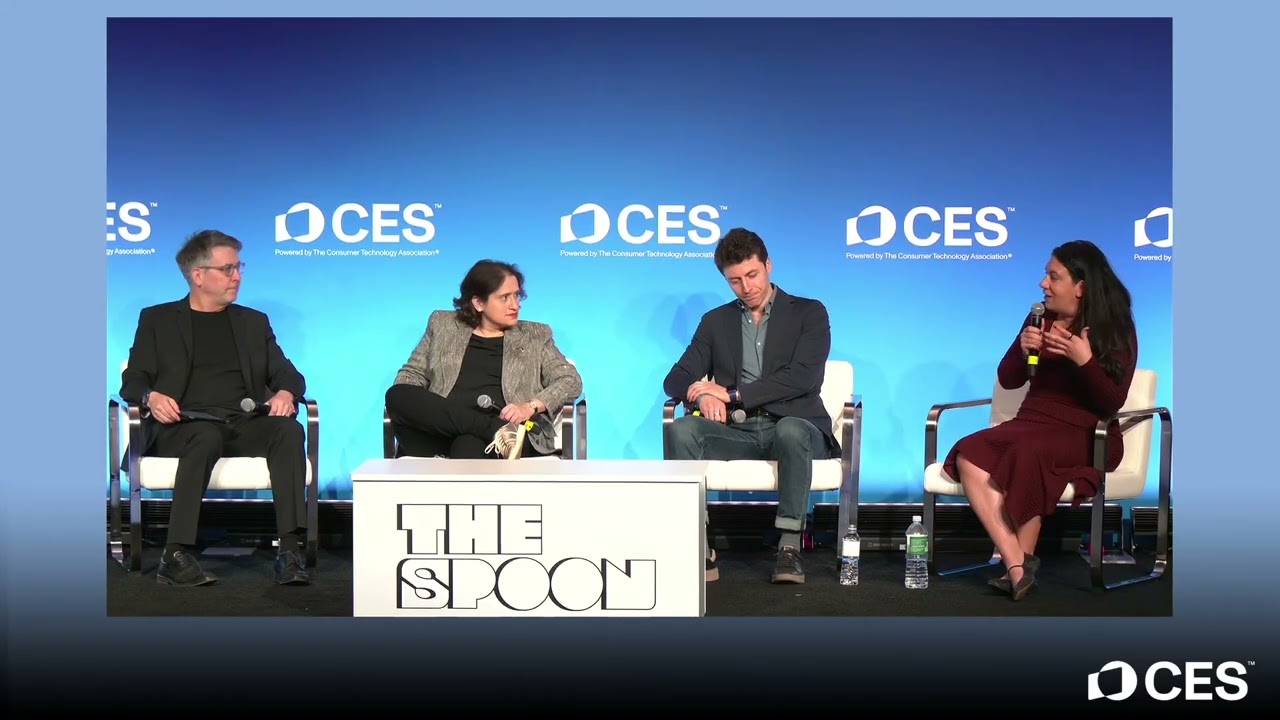
For much of the past couple of decades, talk of the future kitchen at CES has conjured tech-forward images of robotic arms sautéing vegetables, humanoids flipping burgers, and, more recently, AI-powered assistants hovering over the stove. But during a conversation I had with a panel of kitchen insiders a couple of weeks ago in Las Vegas at The Spoon’s Food Tech conference, they made a compelling case that the future of cooking looks slightly more mundane, yet far more useful.
I was joined by Robin Liss, CEO of Suvie; Jonathan Blutinger, senior design engineer at Smart Design; and Nicole Papantoniou, director of the Kitchen Appliances Lab at the Good Housekeeping Institute. Together, they painted a picture of a near-term kitchen future shaped less by futuristic robots and more by quiet, behind-the-scenes intelligence.
To set the table (sorry), I started the conversation by asking where we’ve actually been over the last decade when it comes to the smart kitchen. Papantoniou said a core mistake made by early smart kitchen products was trying to solve problems consumers did not actually have. “A lot of people were putting smart features into products that you didn’t really need,” she said. “I don’t think people understood why they needed Alexa to make coffee for them.” Instead, she argued, success today comes from friction reduction. “It’s becoming way easier, very seamless, and people use it without even realizing it now”.
That shift toward subtlety was echoed by Blutinger, who said many early smart kitchen products were over-engineered. “Just because you can doesn’t necessarily mean you should,” he said. “It should be coming from a human need”.
Slap Some AI on It
A huge percentage of booths at this year’s CES claimed their product was AI-powered, which had me wondering whether today’s market risks repeating the mistakes of the smart kitchen a few years ago, when everyone was “slapping Wi-Fi on everything.” Liss argued that AI today is fundamentally different from the Wi-Fi-first era of connected appliances. “Almost all these products have embedded software or cloud-connected software,” she said. “The way we look at AI is it’s not some all-encompassing model… it’s integrations into steps of the process”.
Blutinger said AI’s biggest problem may be the overuse of the term by marketers, and that while the AI-ification of products is inevitable, both the label and the tech will eventually recede into the background. “That word alone has created such a stigma around it,” he said. “The technology should not be upfront and personal. It should be invisible in a sense”.
Papantoniou agreed, predicting consumer acceptance will likely be higher once AI fades into the background. “Once people stop advertising that it’s AI and it’s just part of the normal product, it’ll be way more accepted”.
Hold the Humanoids
As with my other session at CES focused on food robots, I asked the panelists when, if ever, we’d see humanoid robots walking around our kitchens. And just as with that other panel, they were skeptical. “I still think that’s really soon for us to be seeing it in the home kitchen,” said Papantoniou. “Five years is soon”.
Liss said the adoption of food robots in the home would hinge on safety and practicality. “Food is inherently dangerous, and kitchen appliances dealing with high heat are inherently dangerous,” she said, noting that even in commercial settings, “getting the robot not to hurt the workers around it… that’s the hard part”.
Instead of humanoids, the panel advocated task-specific automation. “We are designed as humans to do so many range of tasks,” said Blutinger. “Like we have to be perfect for so many things. It’s not like cooking takes up 100% of our time. So if we’re trying to optimize for just automation in the kitchen, why do we need these complex articulated (robot) arms doing things? Why not just have like a simple little one degree of freedom rotating thing that just rotates our sauce?”
Why Countertop Appliances Keep Winning
Despite talk of built-in, do-everything cooking boxes, the panelists agreed that innovation will continue to favor specialized countertop devices.
“I would say that probably the reason you’re seeing so many, the proliferation of lots of little countertop appliances, which makes me very happy, is because the innovation is happening there,” said Liss. “And frankly, if you look at the breakout companies, the stock performance of Breville, Shark Ninja, are, you know, Breville is larger than Whirlpool, Shark Ninja is many multiples larger than Whirlpool. It’s because all of the innovation is happening on the countertop because of that replacement cycle challenge of major appliances.”
Papantoniou was blunt about the trade-offs that come with multifunction. “There is that stigma that multifunctional appliances don’t do everything well. And while it’s gotten a lot better, I would say like an air fryer function in an oven is not going to compete with your basket air fryer.”
The Future of The Kitchen Has More Personalization and Less Friction
For my final question, I asked the panelists to look ahead and describe what they see for the kitchen over the next few years, and it was clear they were aligned around a quieter vision of progress.
Papantoniou predicted broader adoption as fear subsides. “People are adopting it more and not being so scared of it and not judging it as harshly, I think, as they did in the past. I think people actually do want their coffee maker to start working while they’re still in their bedroom. So I think that’s gonna just be coming more,” she said.
Blutinger focused on usability. “I think just reduce friction in the kitchen. That’s the biggest thing if you’re trying to innovate in the kitchen space.”
Liss closed with a vision for the future centered on humans, not robots. “I think it’s healthier, more personalized food, cooked how you want it. You’re getting to spend, most importantly, is families getting to spend time with each other happily enjoying meals for those everyday weeknight meals rather than spending an hour, mom spending an hour prepping the food or wasting money on really expensive delivery, right? It’s like a better life for people because they’re eating healthy, good food at home, saving money, and spending time with their loved ones.”
You can watch the full session below.
.
Did you miss our previous article...
https://ballerawards.news/epicure/gambit-robotics-hopes-to-usher-in-a-new-era-of-guided-cooking-without-robots-yet