
At both IFA last fall and this year’s CES in Las Vegas, there was one big trend everyone seemed to be talking about: the rise of humanoid robots from science fiction fantasy to a powerful, multifunctional tool for work and home.
Whether it was folding clothes, pouring drinks, or cooking a meal, the past year seemed to validate Jensen Huang’s prediction that 2025 and beyond would bring a massive acceleration in physical AI, or robots, across nearly every part of our lives.
But when it comes to cooking and the home kitchen, it’s worth asking: will humanoids really be the default robot form factor in the years ahead? Or will kitchen robots look more like the big robotic arms of Moley or the streamlined automated makeline embedded in a countertop system like Chefee?
View this post on InstagramA post shared by Michael Wolf (@michaelawolf)The reality is that, at least in the near term, the answer is probably none of the above, at least not for devices the average consumer will actually want in their home. Instead, the more likely path is a countertop cooking device that looks something like the multifunction cookers we’ve already grown used to, only with more advanced automation and multistep cooking intelligence built in.
In fact, a number of startups are pursuing exactly this vision, creating countertop cooking robots that feel like the lovechild of a Thermomix and an Anova Precision Oven, with the added ability to automatically dispense ingredients and seamlessly transition between cooking functions as they prepare an entire meal.
I first started seeing these countertop cooking robots more than a decade ago with the Sereniti cooking appliance. Since then, I’ve followed and written about Else Labs/Oliver, GammaChef, and, more recently, Posha and Nosh.
Posha is probably the furthest along in bringing a home cooking robot to market. Else Labs/Oliver has largely pivoted to building cooking appliances for offices and commercial environments, while Nosh has been building momentum of its own with its current Kickstarter campaign.
For his part, Posha CEO Raghav Gupta sees a direct evolutionary line between what his company is building and the Thermomix.
“What Posha is is actually Thermomix plus plus,” said Raghav Gupta.
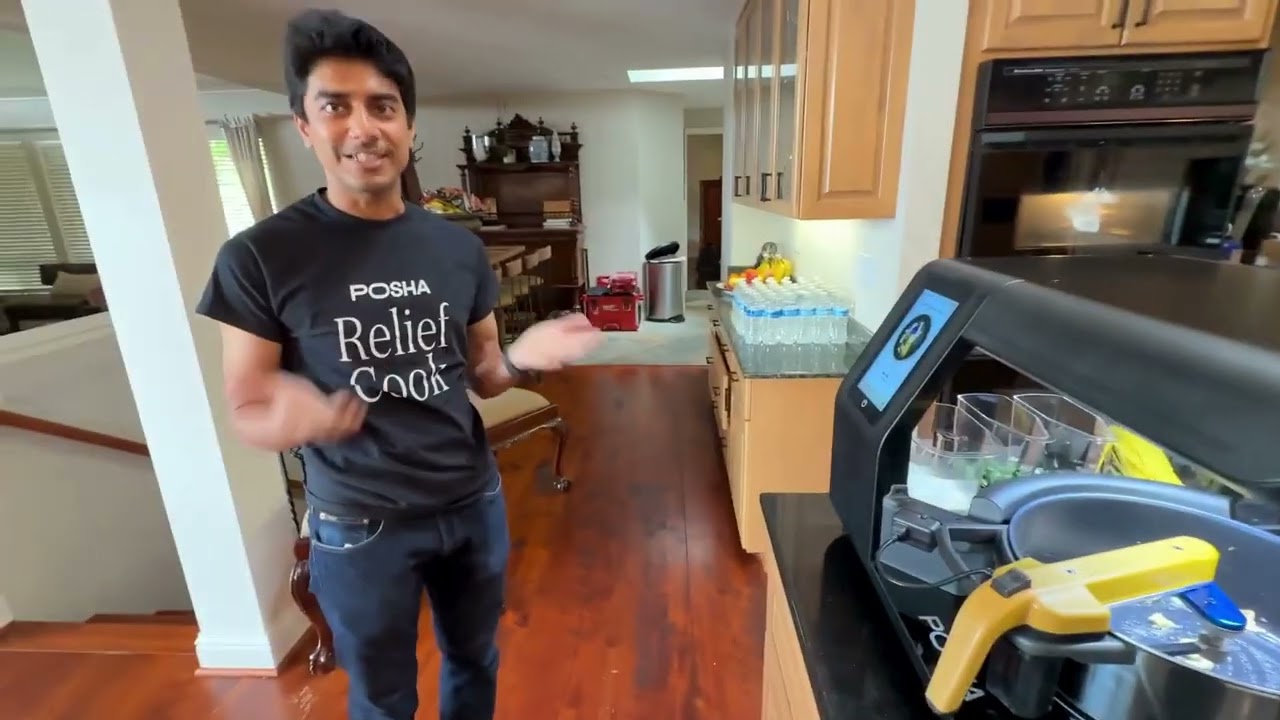
Gupta described the leap from Thermomix to Posha as similar to the jump from a car with advanced driver assistance features to a fully autonomous vehicle.
“In Thermomix, you still have to be around your device. You still have to be behind the wheel,” he said. “In Posha, you don’t have to be behind the wheel anymore. It’s like the Waymo equivalent of driving. You can sit in the back seat, read a book while your self-driving car takes you from point A to point B.”
Nosh co-founder Amit Gupta (no relation) frames the problem similarly, but with a stronger emphasis on the daily burden of home cooking.
“Eating right is impossible because cooking is a burden,” Amit Gupta told The Spoon last year.
Like Posha, Nosh – which has raised over $800 thousand in a Kickstarter campaign for its first generation robot – is betting that the near-term future of cooking robotics won’t have robotic legs or arms, but instead a contained, countertop system built to handle the repetitive, time-consuming parts of meal preparation. Amit describes Nosh as a “kitchen in a box,” a system designed to automate not just heat and timing, but the judgment calls involved in cooking.
That focus on constrained, appliance-like automation is likely closer to what many consumers will choose for their homes over the next five to ten years. But in the longer term, where do humanoids fit?
It all depends on how quickly they become both accessible and able to perform everyday tasks. Much as early training models in the 2010s helped usher in the autonomous driving era, we are now seeing robotics startups and AI companies push to build massive datasets that can help robots move and operate in the real world.
One such effort is Instawork, which equips temp workers with bodycams as they perform everyday tasks. This follows the EPIC Kitchens model, a university research project launched in 2018 to capture physical interactions on video and train computer vision systems for robotics. Today, these newer efforts are scaling the capture of real-world training data by orders of magnitude, driven in large part by the massive funding flowing into the AI-meets-robotics space.
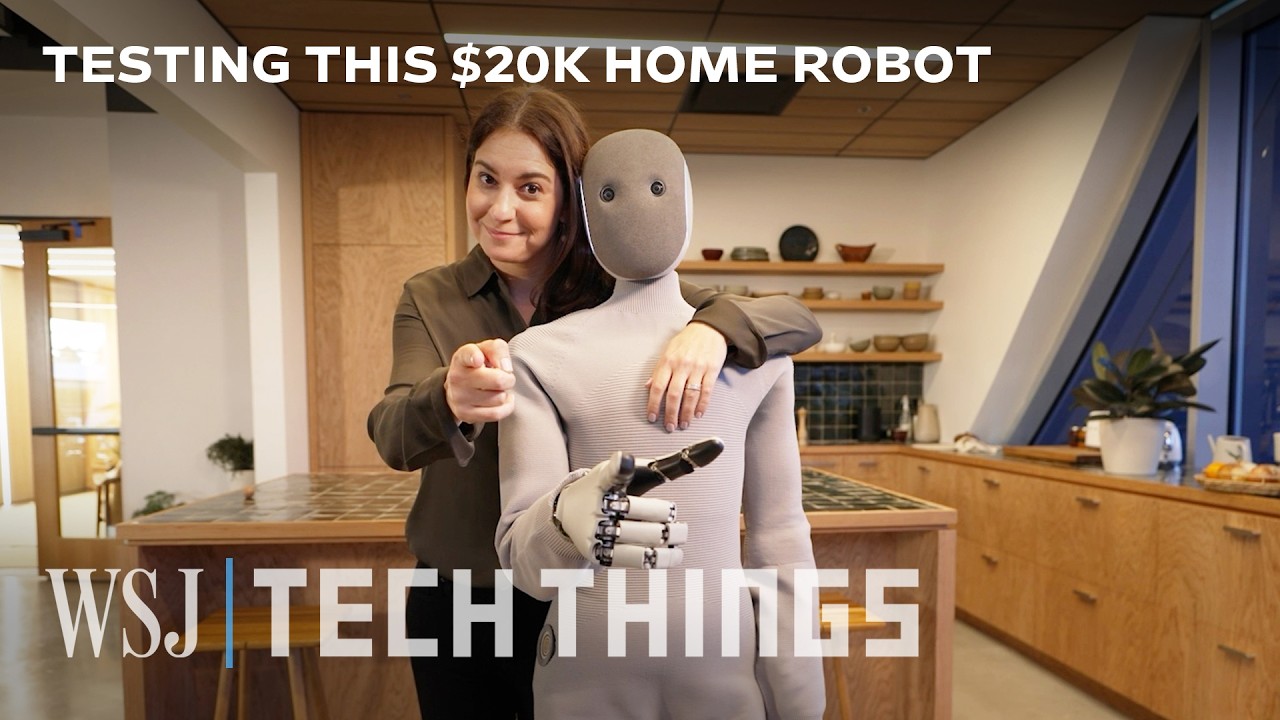
Already, robots can be rented for around $500 a day. But as Joanna Stern’s recent test with the NEO 1 shows in the video below, many of these early systems are still geared toward early adopters. In large part, that’s because the robots aren’t yet trained to perform useful tasks like cooking, and because many systems, including models like Neo 1, are still teleoperated, meaning a human is watching and controlling what happens inside your home in real time.
Long term, once humanoids improve to the point where they can reliably handle cooking and other household tasks, it’s easy to imagine them becoming indispensable for people with mobility, dexterity, or other challenges related to independent living. That is where humanoids may ultimately have the biggest impact in the home, particularly as populations age and the cost of managed care continues to rise.
My mom, who is in her 80s and lives independently, already finds great value in old-school voice assistants like Alexa as an easy way to access information, set timers, and play her favorite music. My guess is that a robotic assistant wouldn’t be that big a leap for her, especially as cooking becomes an ever bigger challenge.
For her (and many of us), the future of kitchen robotics may eventually walk on two legs. But for now, it’s far more likely to sit quietly on the counter.
Did you miss our previous article...
https://ballerawards.news/epicure/the-future-of-food-testing-may-be-in-your-brainwaves