Ten years from now, CES 2026 may be remembered as the year robots took over the show floor. Humanoids folded clothing, boxed items, played games, and talked like product marketing managers.
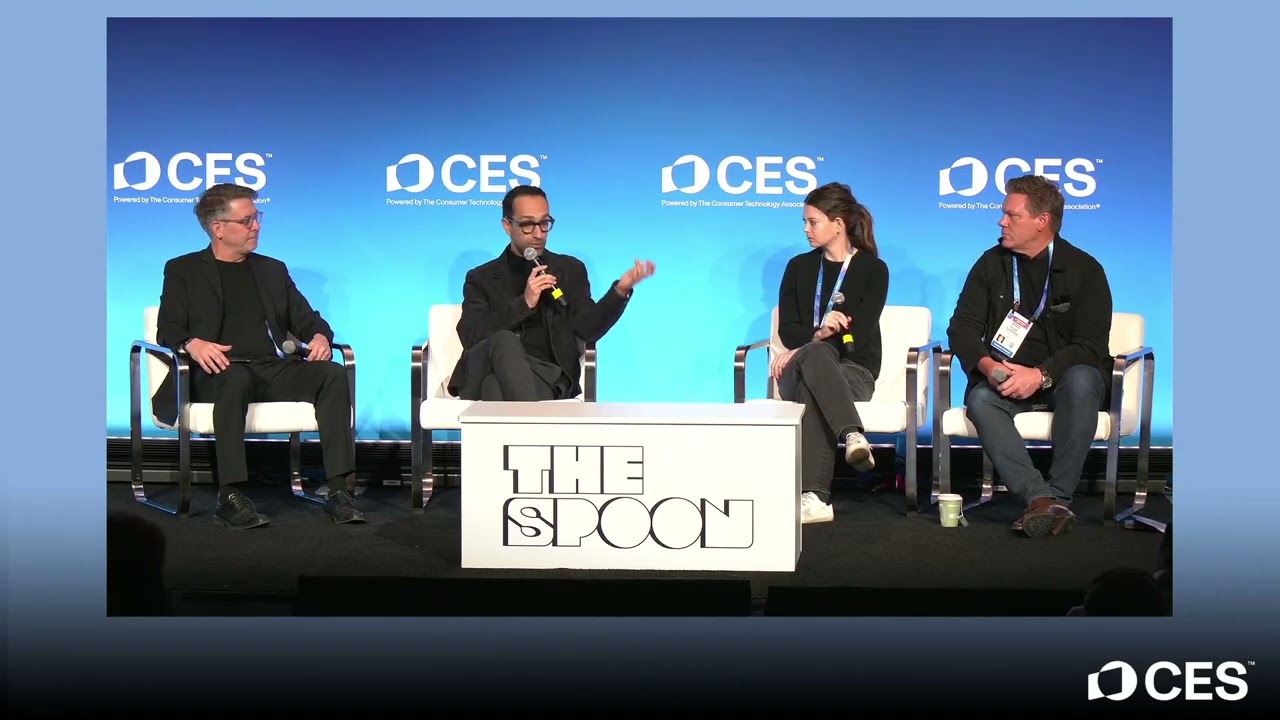
Against that backdrop, I led a conversation on the food tech stage about whether robots may soon take over the kitchen. In a session titled “Robot vs. Chef: Will AI Augment or Replace the Cook?”, I brought together longtime TV chef Tyler Florence with a pair of robot builders: Nicole Maffeo of Gambit Robotics and Ali Kashani of Serve Robotics.
And when I say “pitted,” I mean I let everyone jump into a wide-ranging conversation about the future, one in which most participants were largely in agreement about how robots should be used in home and professional kitchens, though not always.
While tens of thousands of attendees were checking out robots on the show floor and seeing what they could theoretically do, I asked my panelists what robots should actually be doing. From the get-go, they rejected the idea that humans will be replaced by AI or robotics in the kitchen. Chef Tyler Florence framed AI not as a creative force, but as a responsive one, noting that its output is entirely dependent on human input.
“As great as AI is right now,” he said, “it’s really all about the prompts. It’s not going to do anything if it’s just sitting there by itself.”
Rather than replacing chefs, all the panelists agreed that AI and robotics are far better suited to working alongside them, handling the repetitive and unglamorous work that drains time and energy from kitchens.
But what about boring, dangerous, or repetitive tasks? Clearly, not all jobs are fulfilling or even ones that many humans want. And when people do those jobs, there is always the risk of injury.
According to Kashani, repetitive, injury-prone, and hard-to-staff tasks are already being automated.
“If you have that job, like coring an avocado, that’s not a great job,” he said. “It’s actually dangerous. People cut their fingers.” In those cases, Kashani argued, a robot can reduce injuries while freeing humans to focus on creative and guest-facing work.
This idea of using robots that are often focused on a single task and look nothing like a human stood in stark contrast to what we saw on the show floor, where humanoids seemed to be everywhere. When I asked the panelists whether a human-like form factor made sense, all agreed that we would not see humanoids in restaurants or home kitchens anytime soon.
“No one wants a man coming out of their closet to come and cook them dinner and then going back in,” said Kashani.
Maffeo agreed. “We don’t need someone coming out and doing all these things for us,” she said. “Just help us solve these simple pain points that waste so much of our time.”
Maffeo said she believes distributed, specialized robots are both cheaper and more practical than generalized humanoids, at least for the next decade.
Still, there is no doubt that robotics and AI are advancing quickly across the food system. So where does that leave someone like Tyler Florence, who has long made a name for crafting recipes and cooking for people in their own spaces without the help of technology? According to Florence, as robotics becomes more prevalent, the value equation flips, and people begin to crave food crafted entirely by humans. In other words, while machines can do many things well and cheaply, the scarce commodity becomes human judgment, taste, and presence.
“Human-made will become the new luxury item,” Florence said. “Things that feel like this is made by a human being, thought of by a human being, produced by a human being.”
In high-end dining especially, Florence predicted that automation would remain largely invisible, while human interaction becomes a premium experience people are willing to pay for.
But what about the home? Restaurant kitchens and front-of-house operations are businesses where people are accustomed to paying premiums for food prepared by others. The vast majority of meals, however, are eaten at home and made from food in our own pantries and refrigerators. What role will automation and AI play in the home of the future?
According to Kashani, we will increasingly see intelligence from technologies like computer vision, IoT, and automation integrated into everyday appliances to help people plan meals, reduce food waste, and prepare food more easily.
“Every step of that process, we can be assisting people with the help of AI and robots.”
Kashani also pointed to aging-in-place scenarios as an area where automation and AI could be especially helpful. Maffeo agreed and said she believes we will see more technology embedded in pantries and refrigerators to help people better plan meals.
As we closed out the panel, we talked about what the rise of robots and AI in food means for culture, jobs, and society over the long term. I was surprised that, by and large, everyone was cautiously optimistic. Kashani pointed to history as a guide, arguing that productivity gains tend to create new work rather than eliminate it outright. “Every such prediction in the past has been wrong,” he said, noting that employment has historically grown alongside technological change.
I disagreed to a point, suggesting that jobs will be lost, though this was not the place for a deeper conversation about universal basic income.
Florence raised a cultural concern, arguing that food is memory and identity, something passed down through families and communities. “We’re all defined by what our grandparents cooked,” he said. “And that really defines us as people.”
It was a fun and thoughtful conversation, one that explored the implications of what might happen if what we saw on the show floor ultimately becomes the norm. You can watch the full session below.: